

The following websites provide useful information about Portsmouth’s international links:
- For information on twinning, the proven method of building bridges between communities from different countries, visit Portsmouth City Council.
- For more information on other partnership links, visit Portsmouth’s International Links.
Twinning with Maizuru, Japan
Did you know that Portsmouth is linked to 13 cities through twin, sister city and friendship city links including:
Caen, Duisburg, Falkland Islands, Haifa, Halifax Nova Scotia, Maizuru, Portsmouth NH, Portsmouth RI, Portsmouth VI, Sylhet, Sydney, Zhanjiang, Zhuhai?
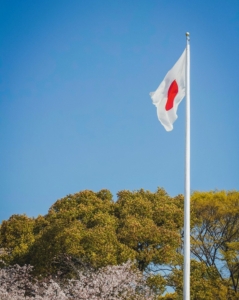
In 2024, we celebrated the 25th anniversary of being a Sister City to Maizuru in Japan. As such, lessons for children across KS1 – 2 were created to mark the event which are still available for teachers to use moving forward. These include quick ideas and activities as well as longer pieces of work to explore in the classroom. Although the deadline has passed for some of the specific competitions and activities, the ideas all remain relevant and there is a wealth of resources and links available.
The outcomes of this work are:
- For children in the city to know that we are sister cities with Maizuru
- For pupils to learn about Maizuru and Japan
- To share and to celebrate their own city with the children of Maizuru
Activities include:
- Playing traditional Japanese games
- Japanese character writing
- Listening to Japanese stories
- Writing a Japanese Haiku
Here are some Maizuru lesson plans, all linked to the national curriculum, for you to use.
Key stage 1/2: Music and singing
Hook: Play video of Japanese children singing a song about their city/country.
Outcome: To learn and record ‘Shaping Portsmouth’ or ‘It’s Portsmouth’ to be sent to children in Maizuru.
KS1 national curriculum links:
Pupils should be taught to:
- use their voices expressively and creatively by singing songs and speaking chants and rhymes
- play tuned and untuned instruments musically
- listen with concentration and understanding to a range of high-quality live and recorded music
- experiment with, create, select and combine sounds using the inter-related dimensions of music
KS2 national curriculum links:
Pupils should be taught to:
- play and perform in solo and ensemble contexts, using their voices and playing musical instruments with increasing accuracy, fluency, control and expression
- listen with attention to detail and recall sounds with increasing aural memory
- appreciate and understand a wide range of high-quality live and recorded music drawn from different traditions and from great composers and musicians
- develop an understanding of the history of music
Suggested activities:
- Listen to examples of Japanese music (Japanese Children’s Songs – Japan – Mama Lisa’s World) and write about what they can hear / how it makes them feel / draw a picture of what it creates in their minds etc.
- Learn the song It’s Portsmouth — Portsmouth Music Hub or Shaping Portsmouth — Portsmouth Music Hub.
- Use instruments to accompany the singing.
- Pupils to write their own verse to add to the song.
- Record pupils performing the song, ready to be shared with children in Maizuru.
Key stage 1: Southsea Japanese Garden
Hook: Visit the Southsea Japanese Garden.
Outcome: To create their own Japanese garden design to share with PCC to create an updated garden to celebrate the anniversary.
KS1 national curriculum links:
Pupils should be taught to:
1. Locational knowledge
- name and locate the world’s seven continents and five oceans
2. Place knowledge
- understand geographical similarities and differences through studying the human and physical geography of a small area of the United Kingdom, and of a small area in a contrasting non-European country
3. Human and physical geography
Use basic geographical vocabulary to refer to:
- key physical features, including: beach, cliff, coast, forest, hill, mountain, sea, ocean, river, soil, valley, vegetation, season and weather
- key human features, including: city, town, village, factory, farm, house, office, port, harbour and shop
4. Geographical skills and fieldwork
- use simple compass directions (North, South, East and West) and locational and directional language [for example, near and far; left and right], to describe the location of features and routes on a map
- use aerial photographs and plan perspectives to recognise landmarks and basic human and physical features; devise a simple map; and use and construct basic symbols in a key
- use maps, atlases, globes and digital/computer mapping to locate countries and describe features studied
- use the eight points of a compass, four and six-figure grid references, symbols and key (including the use of Ordnance Survey maps) to build their knowledge of the United Kingdom and the wider world
- use fieldwork to observe, measure, record and present the human and physical features in the local area using a range of methods, including sketch maps, plans and graphs, and digital technologies.
Suggested activities:
- Locate Japan on a map of the world and decide which continent it is a part of
- Compare Portsmouth and Maizuru
- Create a Japanese themed orienteering course
- Use a plan perspective of the Japanese garden to identify the different features
- Children to create a map of their own Japanese garden design, including a key. Children can then use locational and directional language to describe the features on their map
- KS2 pupils to observe, measure, record and present the human and physical features of the Japanese Garden using a range of methods, including sketch maps, plans and graphs, and digital technologies.
- Pictures of the completed designs could be sent to pupils in Maizuru to show how pupils have chosen to celebrate the anniversary.
Lower/upper key stage 2: Artwork
Hook: Show artwork of Maizuru by Japanese children.
Outcome: To create a piece of art based on Portsmouth to be sent to children in Maizuru.
National curriculum links:
Pupils should be taught:
- to create sketch books to record their observations and use them to review and revisit ideas
- to improve their mastery of art and design techniques, including drawing, painting and sculpture with a range of materials [for example, pencil, charcoal, paint, clay]
- about great artists, architects and designers in history
Suggested activities:
- Create an art gallery made up of copies of Japanese artwork (sent from Maizuru)
- Explore different types of Japanese art e.g. 22 Japanese Arts & Crafts – Japan Talk
- Choose one to practise techniques observed e.g. Manga or origami
- Take a walking tour of the city and take photos / create sketches along the way
- Use these pictures to create their own piece of Portsmouth art to be sent to children in Maizuru
- Learn about an artist from Portsmouth My Dog Sighs
- Children to create a piece of art of Portsmouth based on the style of My Dog Sighs. Could they create an eye with their favourite image / part of Portsmouth inside?
Upper key stage 2: Tourism
Hook: Show tourism videos of Maizuru.
Outcome: To create a tourism video for Portsmouth to be sent to children in Maizuru.
National curriculum links:
Pupils should be taught to:
1. Human and physical geography
Describe and understand key aspects of:
- human geography, including: types of settlement and land use, economic activity including trade links, and the distribution of natural resources including energy, food, minerals and water
- physical geography, including: climate zones, biomes and vegetation belts, rivers,
- mountains, volcanoes and earthquakes, and the water cycle
2. Geographical skills and fieldwork
- use maps, atlases, globes and digital/computer mapping to locate countries and describe features studied
- use fieldwork to observe, measure, record and present the human and physical features in the local area using a range of methods, including sketch maps, plans and graphs, and digital technologies.
Suggested activities:
- Use different types of maps to locate Japan and Maizuru
- Conduct a study of human and physical geography of Portsmouth
- Take a walking tour of the city and take photos / notes of how tourism is an essential part of the local economy.
- Conduct a study of human and physical geography of Maizuru (useful starting point Maizuru – Wikitravel). Is tourism important here too?
- Compare geographical similarities and differences. (Note that Asia is not an area for study in KS2)
- Pupils to create a video to encourage pupils from Maizuru to visit Portsmouth.
Further suggestions
- Introduce children to Japanese games and play adapted versions of them 10 Traditional Japanese Games You Must Know – Trip-N-Travel
- Learn some words and simple phrases in Japanese The world’s best way to learn Japanese – Duolingo
- Have a go at writing some Japanese characters. Hiragana is the main alphabet or character set for Japanese. Visit here for the characters and more information Hiragana – The Japanese Alphabet (Hiragana Chart) – Free Japanese Lessons or watch the video LetterSchool – Learn Japanese! – YouTube
- Learn about Japanese haiku and how this differs from haiku in English e.g. in Japanese, haiku are traditionally printed as a single line, while haiku in English often appear as three lines. Haiku is a type of short form poetry originally from Japan. Traditional Japanese haiku consist of three phrases that contain a kireji, or “cutting word”, 17 on (phonetic units similar to syllables) in a 5, 7, 5 pattern and a kigo, or seasonal reference. Similar poems that do not adhere to these rules are generally classified as senryū. Haiku are traditionally about nature.
- Write a haiku poem